

Selling a Home With a Mortgage: What Every Seller Needs to Know
Selling a home with a mortgage is not only possible — it’s how the vast majority of home sales work.
- Most homeowners carry a mortgage when they sell, and the payoff is handled automatically at closing through a title or escrow company
- U.S. homeowners held an average of approximately $302,000 in home equity as of Q1 2025, meaning most sellers are in a strong position to profit from a sale
- Secondary liens like HELOCs or second mortgages must also be paid off at closing, so knowing your full debt picture before you list matters
- The biggest variables affecting your net proceeds aren’t your mortgage balance — they’re your listing price, your marketing reach, and what you pay in fees
Bottom line: Understanding how mortgage payoff works before you list puts you in control of one of the largest financial transactions of your life.
Millions of homeowners carry a balance on their home loan when they decide to sell — and that balance rarely stops a sale from moving forward. Whether you’re relocating, upsizing, downsizing, or liquidating an investment property, selling a home with a mortgage is a standard part of the real estate process. The mechanics are more manageable than most sellers expect. What matters most isn’t what you owe — it’s how you price your home, how effectively you market it, and how much you walk away with after the closing process is complete.
This guide breaks down exactly how mortgage payoff works, what happens to liens at closing, how to calculate your equity, and what to do if your situation is more complicated than a simple first mortgage.

Can You Sell a Home With a Mortgage?
Yes — and in fact, it’s the norm. According to NAR’s 2025 Profile of Home Buyers and Sellers, the typical seller had lived in their home for a record 11 years before selling. That’s 11 years of mortgage payments — but also 11 years of equity accumulation. Very few sellers reach the point of owning their home outright before putting it on the market.
Selling a home with a mortgage is essentially built into the closing process. Your lender doesn’t need to approve the sale in advance, and you don’t need to pay off your loan before listing. What you do need is enough equity to cover your mortgage payoff, closing costs, and any other fees — and to walk away with something in your pocket. If that math works, you can sell.
The one scenario where things get more complicated is if you owe more than your home is worth — a situation called being “underwater.” We’ll cover that later in this guide, but for most sellers today, rising home values over the last several years mean that’s not the challenge it once was.
How Does the Mortgage Payoff Process Work?
When you sell your home, the process of settling your mortgage happens at the closing table — not before. Here’s how the mortgage payoff process flows from listing to final disbursement.
Requesting a Payoff Statement
The first step is knowing your exact payoff amount. This is different from your current loan balance. Your payoff amount includes remaining principal plus any interest accrued up to your projected closing date, and sometimes a small processing fee. You can request a payoff statement directly from your lender or servicer — most allow this online or via phone, and lenders are legally required to provide it.
One important timing note: payoff statements are only valid for a specific window, typically 10 to 30 days. If your closing gets delayed, you may need to request an updated statement. Experts recommend requesting your payoff letter at least two to three weeks before your closing date to avoid last-minute surprises that could slow the transaction.
What Happens at Closing
When the sale closes, the buyer’s funds flow to the title or escrow company, which acts as a neutral third party to coordinate the payoff. The title company uses the sale proceeds to pay your lender directly. Your mortgage lien is then officially released, the buyer receives a clear title, and any remaining funds — after covering closing costs, agent fees, and other expenses — are wired to you, typically within one to three business days.
If you’ve been paying into an escrow account for property taxes and homeowner’s insurance, any remaining balance in that account will be refunded to you separately, usually within a few weeks after closing.
You Don’t Need to Notify Your Lender Directly
Many sellers wonder whether they need to call their bank when they accept an offer. The answer is generally no. Your title company will reach out to your lender to obtain an updated payoff quote based on the actual closing date. In the meantime, simply continue making your regular mortgage payments as scheduled until the sale closes — stopping early can create complications at the payoff stage.

5 Steps to Successfully Selling a Home With a Mortgage
Selling a home with a mortgage involves the same preparation as any home sale — with a few additional financial checkpoints. Here’s how to move through the process confidently.
- Calculate your equity. Subtract what you owe on all loans secured by the property from your home’s current market value. Factor in a realistic estimate of selling costs — seller closing costs generally run 6–10% of the sale price and include agent commissions, title fees, transfer taxes, and other transaction costs.
- Request a payoff statement. Contact your lender or log into your online account to get your current payoff amount. Remember, this figure includes accrued interest and will be date-specific.
- Price your home accurately. This is where sellers make the most costly mistakes. Overpricing leads to longer days on market and eventual price cuts; underpricing leaves money on the table. Use data from comparable recent sales in your area to establish a competitive listing price.
- Get your home listed and marketed well. The wider your listing exposure, the more competitive your offers will be — and the more leverage you have in negotiations. Getting your home on the MLS and major real estate platforms is essential for reaching today’s buyers.
- Work with a title company to handle the closing. The title company coordinates with your lender to satisfy the mortgage payoff at closing, release the lien, and transfer clear title to the buyer. An integrated title process — one that begins early in your transaction — can significantly compress your overall timeline.
What About Selling a House With a Lien Beyond Your Mortgage?
Your mortgage is technically a lien on your property — a voluntary one you agreed to when you took out the loan. Other types of liens can complicate a sale, however, and sellers are legally required to disclose known liens in most states.
Common liens that can affect the sale of a house include:
- Second mortgages or HELOCs — If you’ve borrowed against your home equity, that balance must also be paid at closing. Your true equity is your home’s market value minus all outstanding loans secured by the property.
- Tax liens — Federal or state tax liens can take priority over other debts and must be resolved before the title can transfer. In some cases, the IRS will allow a tax lien to be paid after the mortgage lien is satisfied, but this requires coordination.
- Judgment liens — If a creditor obtained a court judgment against you, they may have placed a lien on your property. These must be cleared at or before closing.
- HOA liens — Unpaid homeowners association dues can result in a lien that must be settled.
The good news is that in most cases, all of these liens can be paid off using the proceeds from your sale — meaning you don’t necessarily need cash in hand before the closing date. Working with a title company early in the process lets you get ahead of any title issues before they become deal-breakers. A solid home seller checklist should include reviewing all outstanding liens well before your listing goes live.
What Happens to Your Equity When You Sell?
Home equity is the portion of your home’s value that you actually own — the difference between what your home is worth and what you still owe. As of Q1 2025, Bankrate reports that the average mortgage-holding homeowner in the U.S. held approximately $302,000 in home equity, and nearly half of all mortgaged properties qualified as “equity rich” — meaning the outstanding loan balance was less than half the home’s value.
When you sell, your equity is what’s left after:
- Paying off your mortgage balance in full
- Satisfying any secondary liens (HELOCs, second mortgages, etc.)
- Covering your seller closing costs — typically 8–10% of the sale price, which includes agent commissions, title fees, taxes, and other transaction costs
This is why your listing price and the fees you pay to sell matter enormously. A seller paying a 6% commission on a $400,000 home hands over $24,000 in fees before accounting for title, taxes, or repairs. Keeping that cost in check is one of the clearest ways to protect your equity when selling a home with a mortgage.
It’s also worth consulting a tax professional about the capital gains implications of your sale. Under current federal tax law, married couples filing jointly can exclude up to $500,000 in capital gains from a primary residence sale ($250,000 for single filers), provided they’ve lived in the home for at least two of the last five years. Even when your gain falls below those thresholds, the IRS requires you to report the sale on your return using Form 1040 and Schedule D. Tax laws can change, so confirming the current rules with a qualified tax advisor before you close is always a smart move.
What If You’re Underwater on Your Mortgage?
Selling a house when you owe more than it’s worth is a more difficult situation, but it’s not impossible. Being “underwater” or having negative equity means a standard sale won’t generate enough proceeds to cover your full mortgage payoff, and you would need to bring cash to the table at closing — or pursue an alternative.
Options for sellers with negative equity include:
- Waiting for values to recover — If you’re not in a rush, continuing to pay down your mortgage while property values potentially rise may restore your equity position over time.
- Short sale — With lender approval, you may be able to sell the home for less than you owe. The lender forgives the remaining balance (with potential tax implications). Short sales take longer and require documentation, but they can be a viable path.
- Loan modification or deed-in-lieu — In some cases, lenders will work with borrowers who are struggling to find an alternative to foreclosure.
While negative equity situations do exist, they’re relatively uncommon in the current market. Most sellers today have built meaningful equity over years of rising home values, putting them in a strong position to understand their full cost picture before listing.

How to Navigate the Closing Process When Selling a Home With a Mortgage
The closing process when selling a home with a mortgage works essentially the same as any other real estate closing — the title company simply has an additional task of coordinating your payoff. Here’s what you can expect in the final stretch.
The Title Search
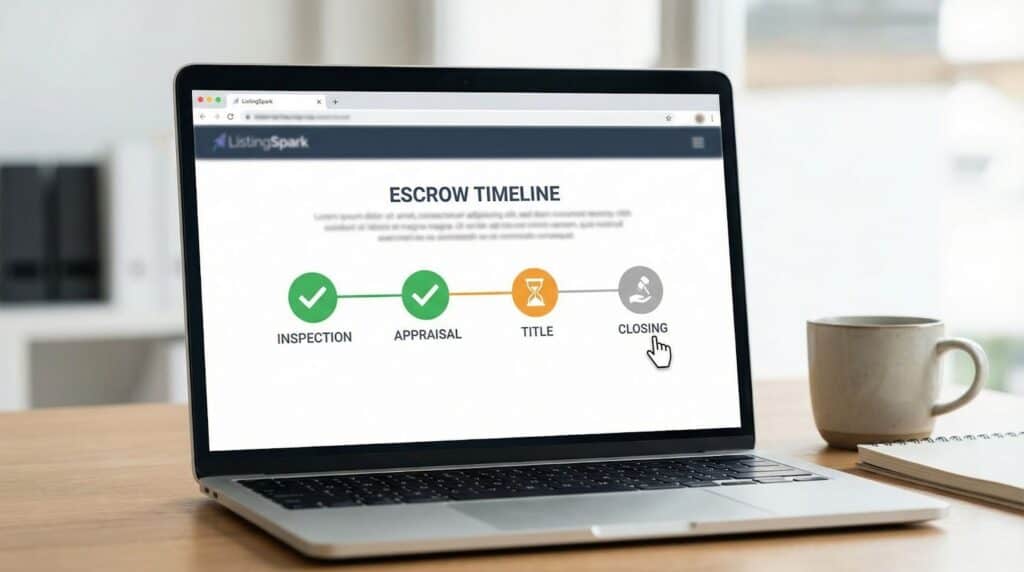
Before closing, a title company will conduct a thorough title search to identify any outstanding liens, claims, or encumbrances on the title. This applies to every sale, whether a mortgage is involved or not. If issues are discovered — a forgotten second mortgage, an unpaid tax bill, an old judgment — they’ll need to be resolved before closing can proceed.
Getting this process started early is a significant advantage. Many sellers don’t realize that beginning the title process at the same time you list your home can compress your overall timeline considerably. Investor sellers and high-volume sellers especially benefit from an integrated title process that runs in parallel to the listing and marketing phase, rather than starting only after an offer is accepted.
The Closing Disclosure
Within three business days of your closing date, your buyer’s lender is required to provide a Closing Disclosure — a detailed statement of all the financial terms of the transaction. As a seller, you’ll also receive a settlement statement that shows exactly where every dollar is going: mortgage payoff, commissions, title fees, taxes, and your net proceeds.
Review this document carefully. Confirm that your payoff amount matches what you were quoted and that all fees are as expected. If anything looks off, your title company can help clarify before you sign.
Remote and Paperless Closings
One meaningful shift in the 2024–2026 real estate market has been the growing adoption of remote closings. Digital signatures, electronic notarization, and paperless document processing make it possible to close your sale without being physically present at a title office. This is especially valuable for investors managing multiple properties or sellers who have already relocated before their closing date.
Frequently Asked Questions
Can I sell my home before my mortgage is paid off? Yes. The vast majority of home sales involve a seller who still carries a mortgage balance. Your lender does not need to approve the sale, and the mortgage is paid off automatically through the closing process using the buyer’s funds.
How do I find out my mortgage payoff amount? Contact your lender directly or log into your loan servicer’s online portal. Request a payoff statement specifying your anticipated closing date. This figure includes your remaining principal, accrued interest, and any applicable fees — and it’s time-sensitive, so request it close to your anticipated closing date.
What happens to my escrow account when I sell? Any money remaining in your escrow account — funds set aside for property taxes and insurance — will be refunded to you after the sale closes, typically within a few weeks.
Do I have to keep making mortgage payments while my home is listed? Yes. Continue making your regular payments as scheduled. Missing a payment during the selling process can affect your credit and complicate the payoff coordination at closing.
What if I have a second mortgage or HELOC? Both must be paid off at closing, just like your primary mortgage. Your title company will identify all liens during the title search and coordinate payoff for each one. Be sure to account for these additional balances when calculating your expected net proceeds.
Is there a penalty for paying off my mortgage early when I sell? Some mortgages include a prepayment penalty clause, typically in the first few years of the loan term. Check your loan documents or ask your lender directly whether your mortgage includes such a clause and what the fee would be.
Make Your Home Sale Work for You
Selling a home with a mortgage is less about the loan balance and more about how you manage the process from pricing to close. The sellers who walk away with the most equity are those who price accurately from day one, market aggressively to attract competitive offers, minimize fee leakage, and work with an efficient closing process that doesn’t let deals fall apart over title delays.
That’s exactly the model that ListingSpark was built around. As a full-service flat-fee listing service, ListingSpark handles everything from MLS listing and professional photography to offer management and integrated title coordination through SparkTitle — all without a traditional listing commission. Whether you’re selling your primary home with a remaining mortgage or managing multiple investment properties, get started with ListingSpark and find out how much more you could keep at closing.

Related Posts

How to Sell Your House Without a REALTOR® in Texas: The Complete 2026 Guide
The 9 steps to sell a Texas home by owner without a listing agent, with closed-sale data from 1,850 Texas sales. Pricing, MLS, disclosures, costs & forms.

Best Flat Fee MLS Services in Texas (2026): Honest Rankings & Cost Comparison
For most sellers, a supported service like ListingSpark is the best fit: you skip the listing agent’s commission but still get expert guidance on pricing, marketing, and negotiation.

Is the Cost of Selling a House Worth It in 2026?
The cost of selling a house in 2026 can easily reach 10% or more of your sale price — but it doesn’t have to. Selling a home is one of the largest financial transactions most…
