
How Accurate is a Free Comparative Market Analysis in Pricing Your Home?
Free comparative market analysis tools vary in accuracy, with online estimators often missing the mark by tens of thousands of dollars when you need precision most.
- Online estimators show 7–8% error rates for off-market homes.
- Professional CMAs access comprehensive MLS data and local market expertise that automated algorithms can’t replicate.
- Automated tools perform worst precisely when homeowners need accurate valuations before listing.
- Human judgment accounts for unique property features, market conditions, and buyer preferences that impact final sale prices.
For the most accurate home valuation, prioritize professional analysis over algorithm-based estimates and combine multiple sources to validate your pricing strategy.
When you’re preparing to sell your home, one question dominates every other consideration: what’s it actually worth? The answer determines whether you’ll maximize your profit or leave money on the table. With free comparative market analysis tools readily available online, many homeowners wonder just how reliable these valuations really are.
As home sales are finally starting to rise, finding the right price point is essential for home sellers looking to take advantage of this turn. Whether you’re using online estimators or professional services, understanding the strengths and limitations of different free home value estimators can mean the difference between a successful sale and months of frustration on the market.
What Free Comparative Market Analysis Options Do I Have?
A comparative market analysis evaluates your property by comparing it to similar homes that have recently sold in your area. However, the term “free” encompasses two distinctly different approaches, each with varying levels of accuracy and reliability.
Online Automated Valuation Models vs Professional Analysis
Numerous automated valuation models promise instant home values. These algorithms analyze public records, tax assessments, and previous sales data to generate estimates. Popular platforms like Zillow’s Zestimate and Redfin’s home value estimator process thousands of data points to deliver rapid results.
Professional comparative market analysis, on the other hand, involves licensed real estate professionals who manually evaluate properties using comprehensive MLS data, local market knowledge, and physical property assessments. These human-driven analyses consider factors that algorithms can’t detect.
The fundamental difference lies in depth versus speed. Automated tools provide convenience and instant gratification, while professional analysis delivers accuracy through human expertise and comprehensive data access.
How Accurate Are Online Home Value Estimators?
Recent industry data reveals significant accuracy limitations in popular online estimators. Understanding these numbers helps set realistic expectations for automated valuations.
Current Accuracy Rates by Platform
Research from 2025 shows varying performance among major platforms. Redfin Estimate maintains a median error rate of approximately 1.98% for homes currently listed on the market, while Zillow’s Zestimate shows a 1.9% error rate for active listings. However, these numbers change dramatically for off-market properties.
For homes not currently for sale, accuracy drops substantially. Redfin’s error rate increases to 7.7% for off-market properties, while Zillow reaches 7%. To put this in perspective, on a $400,000 home, these error rates translate to potential valuation differences of $30,000 or more.
Why Off-Market Accuracy Matters Most
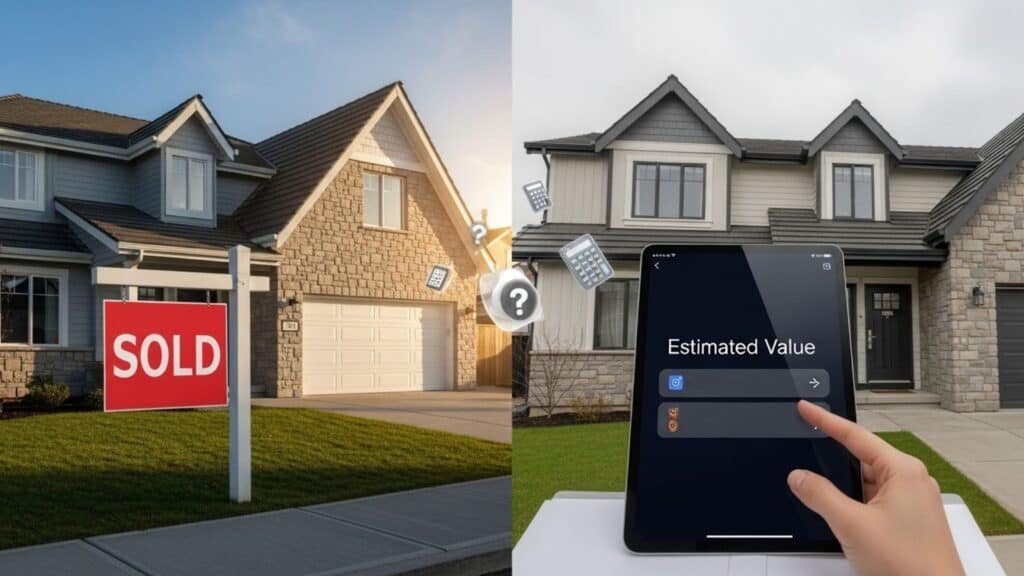
When you’re preparing to sell, your home falls into the off-market category, where automated tools perform worse. This timing issue creates a fundamental problem: you need the most accurate valuation precisely when these tools are least reliable.
Market research consistently demonstrates that even the most sophisticated algorithms struggle with off-market properties because they lack real-time buyer feedback, current market positioning data, and recent comparable sales adjustments that active listings provide.
What Factors Impact CMA Real Estate Accuracy?
Several critical elements determine whether a free comparative market analysis will provide useful guidance or misleading information for your home pricing strategy.
Data Quality and Recency
The foundation of any accurate home price analysis lies in the quality and timeliness of underlying data. Professional analyses benefit from comprehensive MLS access, which provides complete sales histories, actual closing prices, and current market activity that public databases often lack.
Many online tools rely on public records that may be outdated by months or even years. Tax assessments frequently lag behind market values, and some jurisdictions only update property information annually. These discrepancies create a blind spot during rapidly changing market conditions.
Recent sales data proves essential for accuracy. The most reliable comparative analyses focus on properties sold within the past three to six months, depending on local market velocity. Older sales data becomes increasingly irrelevant as market conditions shift.
Property Uniqueness and Special Features
Automated valuation models struggle with unique properties or homes featuring unusual characteristics. Algorithm-based systems excel when analyzing cookie-cutter subdivisions with numerous similar sales but falter when evaluating custom homes, properties with unique architectural features, or houses with significant upgrades.
Special features like swimming pools, finished basements, or premium appliances require human judgment to properly value. Online estimators may recognize that these features exist but often apply generic adjustments that don’t reflect local market preferences.
Location-specific factors also challenge automated systems. Properties with exceptional views, proximity to busy roads, or unique neighborhood characteristics require local market knowledge that algorithms can’t reliably provide.
Local Market Expertise
Real estate markets vary between neighborhoods, cities, and regions. What buyers value in one area may be irrelevant or even detrimental in another location. Professional comparative market analysis incorporates this local knowledge through agents’ direct market experience.
Experienced real estate professionals understand subtle market dynamics like seasonal buying patterns, neighborhood desirability trends, and buyer preferences that impact property values. These insights prove impossible for automated systems to consistently capture and apply correctly.
Professional CMA vs Algorithm-Based Estimators
The accuracy gap between professional home price analysis and automated estimators becomes more pronounced when examining their fundamental methodologies and capabilities.
MLS Access and Data Depth
Licensed real estate professionals possess exclusive access to Multiple Listing Service databases that contain comprehensive property information unavailable to public automated tools. This data includes actual sale prices, days on market, listing history, and detailed property descriptions.

MLS data provides crucial insights that impact accuracy. For example, many online platforms only display original listing prices rather than final sale prices, which can differ by tens of thousands of dollars. This data limitation severely compromises the accuracy of automated valuations.
Professional home price analysis also incorporates pending sales and current market inventory, providing real-time market context that historical data can’t deliver. This forward-looking perspective helps identify emerging trends that may affect property values.
Human Judgment and Market Intelligence
Perhaps the most significant advantage of a professional CMA for real estate lies in human expertise and judgment. Experienced agents can identify and adjust for factors that algorithms consistently miss or misinterpret.
Professional analysts consider market timing, buyer motivation patterns, and competitive positioning strategies that influence final sale prices. They understand when to prioritize certain comparable sales over others based on relevance and market conditions.
Local market intelligence also enables professionals to anticipate buyer reactions to specific property features, neighborhood trends, and pricing strategies that optimize sale outcomes.
What Is the True Cost of Inaccurate Home Valuations?
Pricing errors carry financial consequences beyond simple mathematical miscalculations. Understanding these costs helps justify investing in accurate valuation methods.
Overpricing Consequences
Homes priced too high typically experience extended market times, reduced buyer interest, and ultimately lower sale prices. Properties that sit on the market for extended periods develop stigma among buyers and agents, who begin questioning what’s wrong with the property.
Extended market exposure also increases carrying costs, including mortgage payments, insurance, taxes, and maintenance expenses. For homeowners who have already purchased their next home, these dual housing costs can create significant financial pressure.
Market data consistently shows that homes priced correctly from the beginning achieve higher final sale prices than properties that require multiple price reductions to attract buyers.
Underpricing Risks
While less common, underpricing presents its own challenges. Homes priced significantly below market value may attract bidding wars, but they also risk leaving substantial money on the table if buyer competition doesn’t materialize.
Underpricing can also signal desperation or property defects to experienced buyers and agents, potentially reducing final offers even when multiple buyers express interest.
The key lies in identifying the best price point that maximizes both buyer interest and final sale price, which requires accurate market analysis.
How to Maximize CMA Accuracy: Best Practices
Smart homeowners can improve their chances of receiving accurate valuations by understanding how to effectively evaluate and utilize different analysis sources.
Comparing Multiple Sources
Rather than relying on a single valuation source, successful home sellers typically gather estimates from multiple platforms and professionals. This approach helps identify outliers and provides a more comprehensive picture of potential market value.
When comparing different estimates, pay attention to the methodologies used and the recency of comparable sales data. Variations between estimates often indicate either unique property characteristics or data quality issues that require further investigation.
Document the assumptions and adjustments made by different sources to understand why estimates may vary. This information proves valuable when setting your final listing price and preparing for buyer negotiations.
Questions to Ask About Any CMA
Regardless of whether you’re reviewing an automated estimate or a professional analysis, certain questions help evaluate reliability and usefulness. Understanding the source and recency of comparable sales provides insight into the estimate quality.
Ask about the geographic boundaries used for comparable sales selection. Broader search areas may include properties from different neighborhoods or market conditions that don’t accurately reflect your home’s value.
Inquire about adjustments made for property differences and how unique features were valued. Professional analyses should clearly explain their reasoning for price adjustments and comparable property selection.
Timing Your Market Analysis
Conducting comparative market analysis during stable market conditions typically yields more reliable results than analysis during periods of rapid change.
Consider seasonal market patterns when evaluating your home’s value. Spring and summer markets often show higher activity and prices, while winter months may present different buyer demographics and price sensitivity.
Regular market monitoring helps identify optimal timing for both analysis and actual listing decisions.
Red Flags: When to Question Your CMA Results
Recognizing unreliable or problematic CMA real estate results helps avoid costly pricing mistakes and identifies when additional analysis may be necessary.
Inconsistent Comparable Sales
Quality comparative analysis relies on truly similar properties sold under comparable market conditions. Be wary of analyses that include properties with significantly different sizes, ages, or features without appropriate adjustments.
Geographic consistency also matters. Comparable sales should come from the same neighborhood or very similar areas with similar buyer demographics and property values.
Time sensitivity is crucial. Analyses relying heavily on sales older than six months may not reflect current market conditions, especially during periods of rapid change.
Unrealistic Price Ranges
Professional comparative market analysis should provide realistic price ranges rather than overly precise single-point estimates. Be suspicious of any analysis that suggests your home is worth significantly more than similar recent sales without a clear justification.
Similarly, estimates that fall far below recent comparable sales may indicate data errors or failure to recognize valuable property features and improvements.
Limited Explanation or Documentation
Reliable comparative market analysis includes clear explanations of methodology, comparable property selection criteria, and price adjustments. Avoid analyses that provide conclusions without supporting documentation or reasoning.
Professional analyses should also discuss local market conditions, recent trends, and factors that may influence your property’s marketability and value.
5 Ways to Get the Most Accurate Home Valuation
Smart homeowners employ multiple strategies to ensure they receive the most reliable and useful property valuations for their selling decisions.

1. Combine Professional and Online Analysis
Start with online estimators to establish a general value range, then supplement with professional comparative market analysis for accuracy and local market insights. This approach provides both convenience and precision.
Use online tools from multiple platforms to identify potential red flags or significant variations that warrant further investigation. Consistent estimates across platforms suggest more reliable valuations.
2. Request Recent Comparable Sales Data
Whether working with online tools or professionals, insist on seeing the actual comparable sales used in your analysis. Review sale dates, property features, and final sale prices to understand how your estimate was derived.
Pay particular attention to properties that sold within the past three months, as these provide the most relevant market data for your pricing decisions.
3. Account for Property Improvements and Condition
Ensure any analysis accounts for recent improvements, upgrades, or changes to your property. Include both positive enhancements and any deferred maintenance that might impact value.
Provide detailed information about unique features, quality of finishes, and overall property condition to improve estimate accuracy.
4. Consider Current Market Conditions
Understand whether your local market favors buyers or sellers, as this impacts both pricing strategy and final sale prices. Market conditions influence how aggressively you can price and how quickly you need to respond to buyer feedback.
Seasonal trends also affect accuracy, so timing your analysis appropriately can improve reliability.
5. Validate with Professional Expertise
Even if you start with automated estimates, validate your conclusions with local real estate professionals who understand your specific market conditions and buyer preferences.
Professional validation becomes especially important for unique properties, luxury homes, or markets with limited comparable sales data.
Frequently Asked Questions
How often should I update my home’s market analysis? Market conditions change continuously, so updating your analysis every 30 to 60 days provides current insights. If you’re actively preparing to sell, monthly updates help track market trends and adjust pricing strategy accordingly.
Can I trust online estimators for rough value estimates? Online estimators provide useful starting points for general value ranges, especially for standard properties in active markets. However, treat these as rough estimates rather than precise valuations, and always supplement with additional analysis before making important decisions.
What’s the difference between a CMA and an appraisal? A comparative market analysis is typically performed by real estate agents to help price properties for sale, while appraisals are conducted by licensed appraisers for lending purposes. Appraisals follow stricter guidelines and are required for most mortgage transactions, but CMAs often provide more current market insights for selling decisions.
How do I know if my CMA is accurate? Compare results from multiple sources, verify the quality and recency of comparable sales data, and ensure the analysis accounts for your property’s unique features. Professional analyses should include clear explanations of methodology and assumptions used in valuation calculations.
Making the Right Choice for Your Home Sale
Understanding the accuracy limitations and strengths of different comparative market analysis approaches empowers you to make informed decisions about your home’s valuation and pricing strategy.
The investment in accurate valuation typically pays for itself through optimized pricing strategy, reduced market time, and higher final sale prices. Innovative platforms combine professional expertise with modern technology, prioritizing accuracy for better selling outcomes.
ListingSpark bridges the gap between convenience and accuracy by offering professional comparative market analysis combined with affordable, transparent pricing. Our platform provides access to comprehensive MLS data and experienced real estate professionals without the traditional high costs. Get started with your free comparative market analysis and discover how professional expertise can maximize your home’s sale price.

Related Posts

Best Flat Fee MLS Services in Texas (2026): Honest Rankings & Cost Comparison
For most sellers, a supported service like ListingSpark is the best fit: you skip the listing agent’s commission but still get expert guidance on pricing, marketing, and negotiation.

Is the Cost of Selling a House Worth It in 2026?
The cost of selling a house in 2026 can easily reach 10% or more of your sale price — but it doesn’t have to. Selling a home is one of the largest financial transactions most…

Selling a Home With a Mortgage: What Every Seller Needs to Know
Selling a home with a mortgage is not only possible — it’s how the vast majority of home sales work. Bottom line: Understanding how mortgage payoff works before you list puts you in control of…
